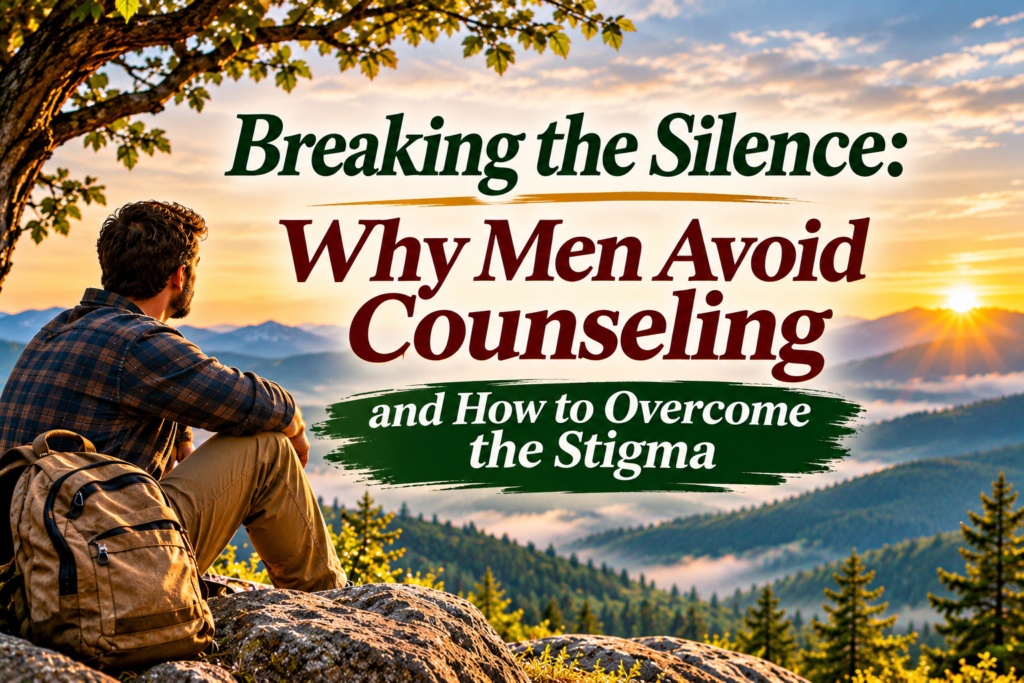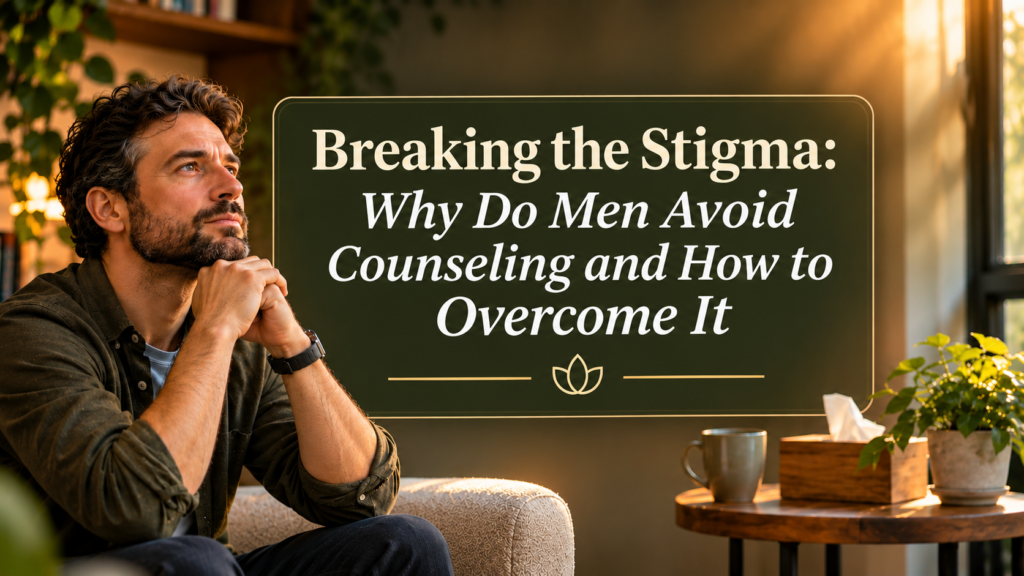
Breaking the Silence: Why Men Avoid Counseling and How to Overcome the Stigma
November 13, 2026
When Is It Time for Men to Seek Counseling?
Recognizing the Signs Before Isolation Breeds Destruction
Introduction
In our fast-paced world, the conversation around mental health has thankfully begun to shift. We talk more openly about stress, anxiety, and the importance of self-care. Yet, when it comes to men's mental health, barriers still linger. Societal expectations often whisper that men should be the pillars of strength, handling their burdens in silence without ever cracking under pressure.
This silent struggle frequently leads to a critical question asked by men, loved ones, and wellness advocates alike: What are the actual signs that a man might need professional counseling?
While everyone's journey is unique, mental health professionals often point to two primary red flags that signal it is time to look outside your immediate circle for support. Understanding these signs can mean the difference between spiraling into isolation and taking proactive steps toward healing.
When Is It Time for Men to Seek Counseling?
Explore the warning signs of isolation, the impact of strained relationships, and how professional counseling can provide a path toward connection, perspective, and lasting well-being.

Deep Isolation and Lack of Connection
The first major sign that counseling or therapy is needed is when a man continues to isolate himself.
Human beings are wired for connection. Whether it is a close-knit group of friends, a hobby community, a "ride-or-die" crew, or a supportive family network, having people integrated into your life is a protective psychological buffer.
However, when a man begins pulling away— retreating inward, declining invitations, and avoiding communication—it is often a defense mechanism masking deeper emotional distress.
Why Isolation Breeds Destruction
When nobody gets into a man's life, he loses his reality check. In isolation, negative thoughts compound unchecked. Minor setbacks morph into catastrophic failures, and feelings of inadequacy deepen into depression or anxiety.
Isolation breeds destruction because it robs a person of perspective. Without external voices of encouragement or alternative viewpoints, an isolated individual remains trapped inside their own head.
If you notice that you or a man in your life has completely cut off social ties, stopped participating in shared hobbies, or has nobody they can confide in, this is a glaring sign that professional guidance is needed.

Overburdening Your Support System
Interestingly, the second sign that counseling is required sits on the exact opposite end of the behavioral spectrum. Instead of isolating, this happens when a man recognizes he is struggling, reaches out for help, but ends up wearing out his friends.
It is wonderful to have trusted friends who can lend a listening ear. However, life gets heavy, and friends are not licensed mental health professionals.
When an individual is facing a chronic series of problems, trauma, or emotional turbulence, leaning exclusively on friends can strain those relationships to their breaking point.
Recognizing Friend Fatigue
Have you ever felt like your friends change the subject when you start talking about your struggles? Do you notice sighs, hesitation, or emotional withdrawal from the people you turn to for help?
This doesn't necessarily mean your friends don't care about you; it often means they feel unequipped to handle the weight of your ongoing challenges.
When your continual need for help begins to exhaust your social circle, it is a clear indicator that you need a dedicated, neutral space to process your experiences.

Demystifying Counseling: What Makes a Professional Different?
There is often a lingering stigma attached to therapy. Many men wonder, What can a counselor do that my best friend cannot?
The truth is, there is nothing inherently "super special" or magical about a counselor as a human being. A therapist is simply a person who has been rigorously trained in the art of asking the right questions and guiding the processing of those questions.
While a friend might offer well-meaning advice based on their own personal biases, a trained counselor provides:
A safe space free from judgment, where you do not have to worry about burdening the listener.
The ability to ask probing questions that help you uncover root causes rather than just treating surface symptoms.
Evidence-based strategies to regulate emotions, navigate relationship conflicts, and rebuild resilience.
Sometimes, a friend's advice is precisely the right answer. But when you find yourself caught in cyclical problems without a clear way out, a professional brings structure and expertise to your healing journey.

Overcoming the Stigma of Men's Mental Health
Why is it so hard for men to take that first step? The answer lies deeply embedded in cultural conditioning. From a young age, many boys are taught to "suck it up," suppress vulnerability, and equate asking for help with weakness.
This cultural narrative is dangerous. Seeking help does not diminish your strength; it preserves it. Recognizing that you cannot fix every emotional or psychological challenge on your own is an act of profound maturity and self-awareness.
Breaking the stigma starts with changing our internal dialogue. Therapy is not a punishment or an admission of failure— it is a maintenance check for the mind, much like going to the gym to keep your body strong.

How to Know It's Time to Reach Out
If you are reading this and wondering whether it is time for you or someone you care about to seek professional support, ask yourself these diagnostic questions:
If you answered yes to any of these questions, it may be time to stop white-knuckling your way through life.

Taking Control of Your Well-Being
Life is unpredictable, and carrying heavy emotional baggage alone is an exhausting way to live. Whether you are dealing with profound isolation or feeling like you've worn out your support network, remember that you don't have to navigate these hurdles by yourself.
Recognizing the signs that you need counseling is the first step toward reclaiming your peace of mind. Reach out to a local professional, explore telehealth options, and give yourself permission to invest in your mental health.