
Service vs. Solution: Finding the Right Path in Men’s Counseling
July 15, 2026
Where Your Feet Are: How Men Can Truly Leave Work at Work
August 6, 2026Change is one of the few constants in life. Whether we are pursuing personal goals, advancing in our careers, building relationships, or simply growing as individuals, change is always happening. Some changes arrive gradually, while others appear without warning, forcing us to adapt to unfamiliar circumstances. Despite its certainty, change often brings feelings of fear, uncertainty, and resistance. We naturally seek comfort in routines and familiarity, making unexpected transitions feel overwhelming.
Yet, the discomfort we associate with change is not always caused by the change itself. More often, it comes from the way we perceive it. We tend to assume that every disruption will lead to difficulty or loss before it has even occurred. This mindset creates unnecessary emotional strain, making the transition feel harder than it truly is. Learning how to accept change without strain begins by recognizing that our resistance—not the change itself—is often the greatest obstacle.
Understanding the Nature of Inevitable Change
As emphasized in Video 6, change is not optional. It continues whether we welcome it or resist it.
“Change is inevitable… whether we admit it, whether we make it happen or not. Change is happening, whether it’s decay or whether it’s life, whether it’s growth or whether it’s destruction, change will happen.”
This powerful reminder highlights an important truth: change is neither good nor bad—it simply exists. Nature provides countless examples of this reality. Seasons change, trees lose their leaves before blooming again, rivers continuously reshape the land, and every living organism experiences growth, aging, and renewal.
Human life follows the same pattern. Careers evolve, relationships develop, technology advances, and our personal beliefs mature over time. Every stage of life introduces new experiences that require us to adapt. While we often celebrate positive changes such as promotions, personal achievements, or new opportunities, we tend to resist changes that involve uncertainty or discomfort.
The problem is not that change occurs. The problem is expecting life to remain the same.


Why Change Feels So Difficult
If change is such a natural part of life, why does it often feel so stressful?
The answer lies in the way our minds are wired. The brain naturally prefers certainty because familiarity feels safe. Predictable routines require less mental effort, while unfamiliar situations demand adjustment and problem-solving. Whenever something changes unexpectedly, the brain interprets it as a potential threat, even if the change may ultimately be beneficial.
This explains why people often experience anxiety before starting a new job, moving to a different city, beginning a relationship, or pursuing a major goal. The future is uncertain, and uncertainty creates discomfort.
However, much of this discomfort is created long before the actual event happens. Instead of responding to reality, we respond to imagined possibilities.
When facing an upcoming transition, our minds often begin asking questions such as:
- What if everything goes wrong?
- What if I fail?
- What if I can’t handle it?
- What if this makes my life worse?
These thoughts generate stress even though none of them have happened.
Video 6 captures this perfectly:
“Just because change exists doesn’t mean there has to be a strain… Sometimes just the fact that we decide that it’s gonna be bad or we think that it’s gonna be bad will create that strain.”
This insight shifts our perspective entirely. The strain is not always caused by change itself—it is often created by the story we tell ourselves about the change.
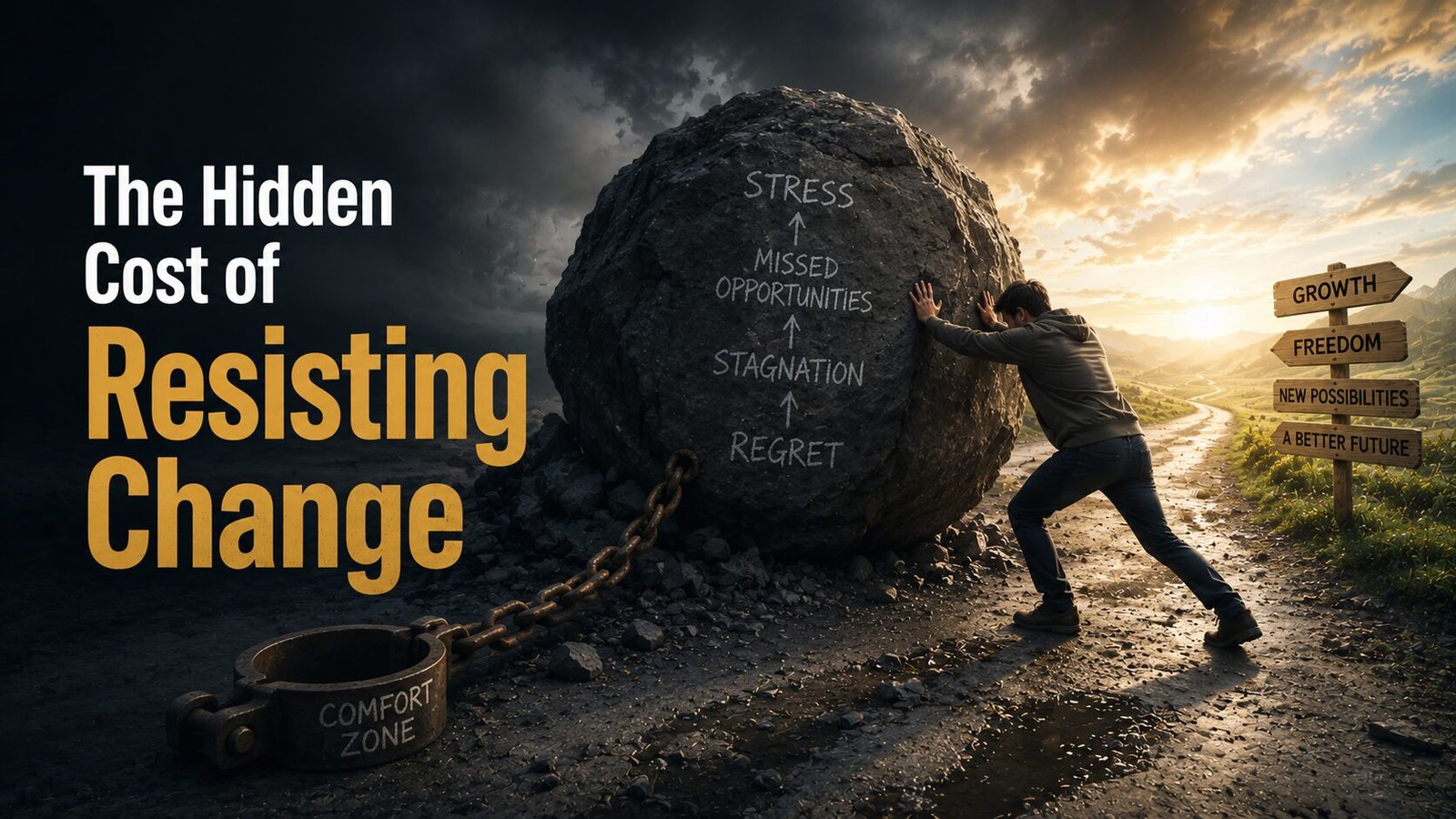
The Hidden Cost of Resisting Change
Resistance is a natural response, but holding onto it comes with consequences.
When we fight against inevitable change, we spend valuable emotional energy trying to preserve something that cannot remain the same forever. Instead of preparing for what lies ahead, we remain focused on what we are afraid of losing.
Resistance often leads to:
- Increased anxiety and stress
- Difficulty making decisions
- Fear of taking opportunities
- Emotional exhaustion
- Reduced confidence during transitions
Ironically, resisting change rarely prevents it. Instead, it simply makes the experience more painful.
Imagine standing in a flowing river while trying to stop the current with your hands. The water continues moving regardless of your effort, leaving you exhausted. Accepting change is like learning to move with the current rather than fighting against it. You still navigate the river, but you no longer waste energy resisting what cannot be controlled.

Shifting Your Perspective
One of the most powerful mindset changes we can make is replacing the belief that change is dangerous with the understanding that change is simply part of life.
Instead of thinking:
“Everything is changing. This is terrible.”
Try replacing that thought with:
“Everything is changing. That’s how life works.”
This small adjustment creates a remarkable difference in how we experience transitions.
Acceptance does not mean pretending challenges do not exist. It simply means acknowledging reality without adding unnecessary fear.
When we stop labeling every change as a problem, we become more capable of responding wisely instead of reacting emotionally.
This mindset shift allows us to remain calm even when circumstances are uncertain.
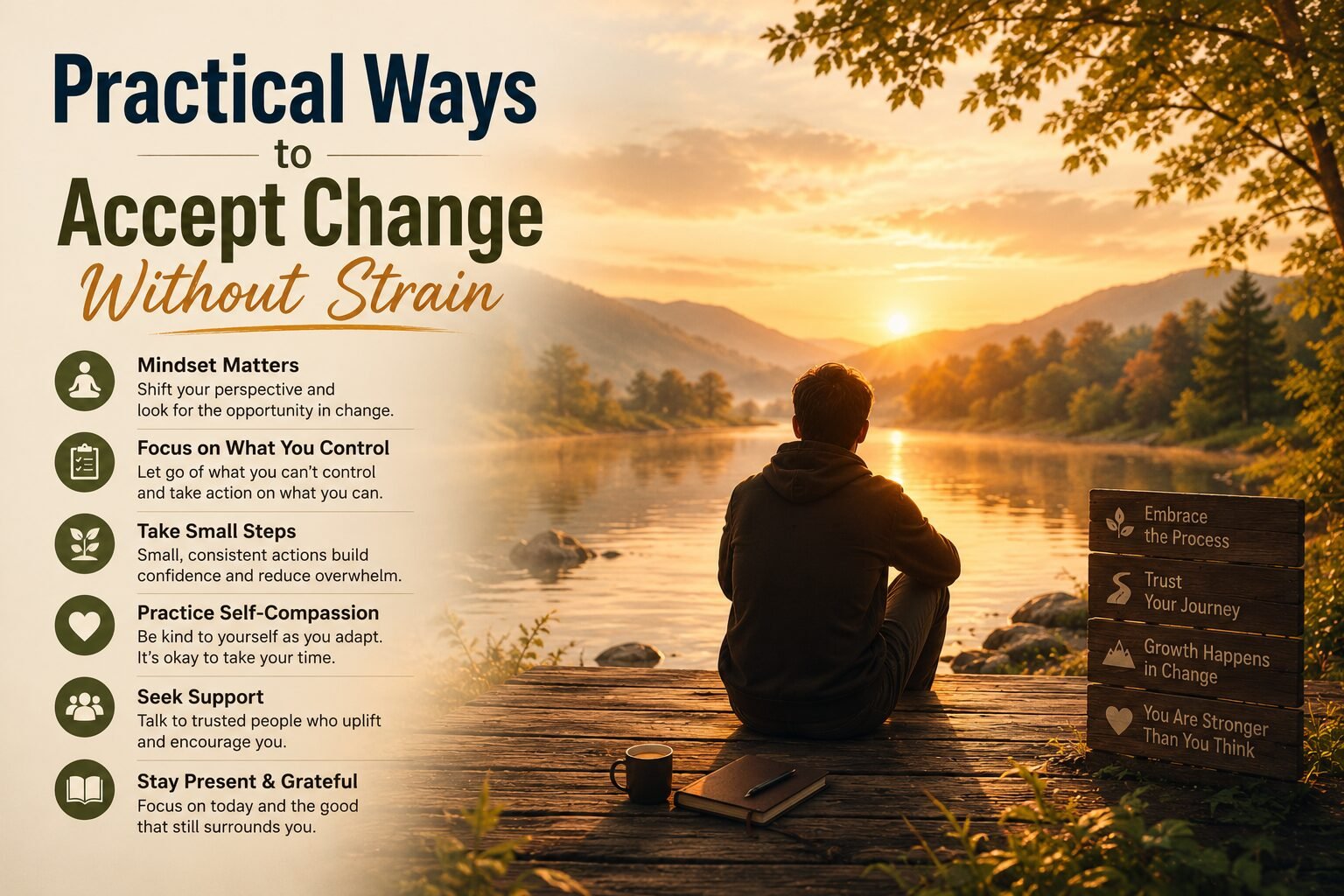
Practical Ways to Accept Change Without Strain
Accepting change is a skill that develops with practice. While uncertainty may never disappear completely, we can learn to approach it with greater confidence and resilience.
1. Separate Reality From Assumptions
Whenever change approaches, ask yourself two simple questions:
What is actually happening right now?
What am I imagining might happen?
Most worries belong in the second category. Recognizing the difference prevents imagined fears from becoming real emotional burdens.
2. Focus on What You Can Control
Many transitions involve factors outside our control. Instead of worrying about every possible outcome, concentrate on the actions you can take today.
You cannot control the future, but you can control your preparation, attitude, and response.
This shift replaces helplessness with confidence.
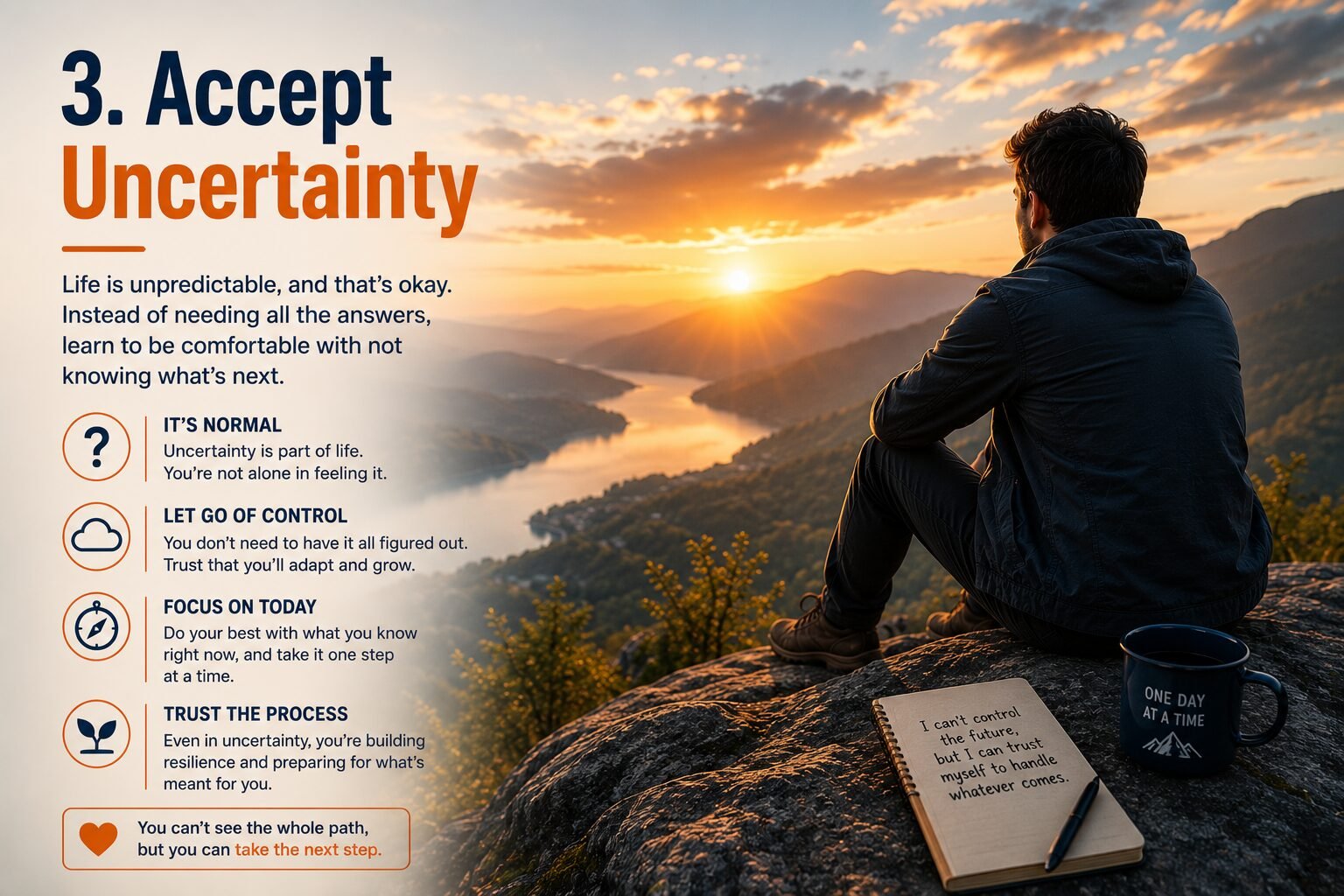
3. Accept Uncertainty
Life has never offered complete certainty.
Waiting until everything feels predictable before taking action often means waiting forever.
Growth happens when we move forward despite not having every answer.
Learning to become comfortable with uncertainty is one of the greatest skills we can develop.
4. Maintain Healthy Daily Habits
During periods of change, routines become especially valuable.
Simple habits like exercising, eating well, sleeping consistently, reading, praying, or reflecting each day provide stability when everything else feels uncertain.
These daily anchors remind us that while circumstances may change, our character and values remain steady.
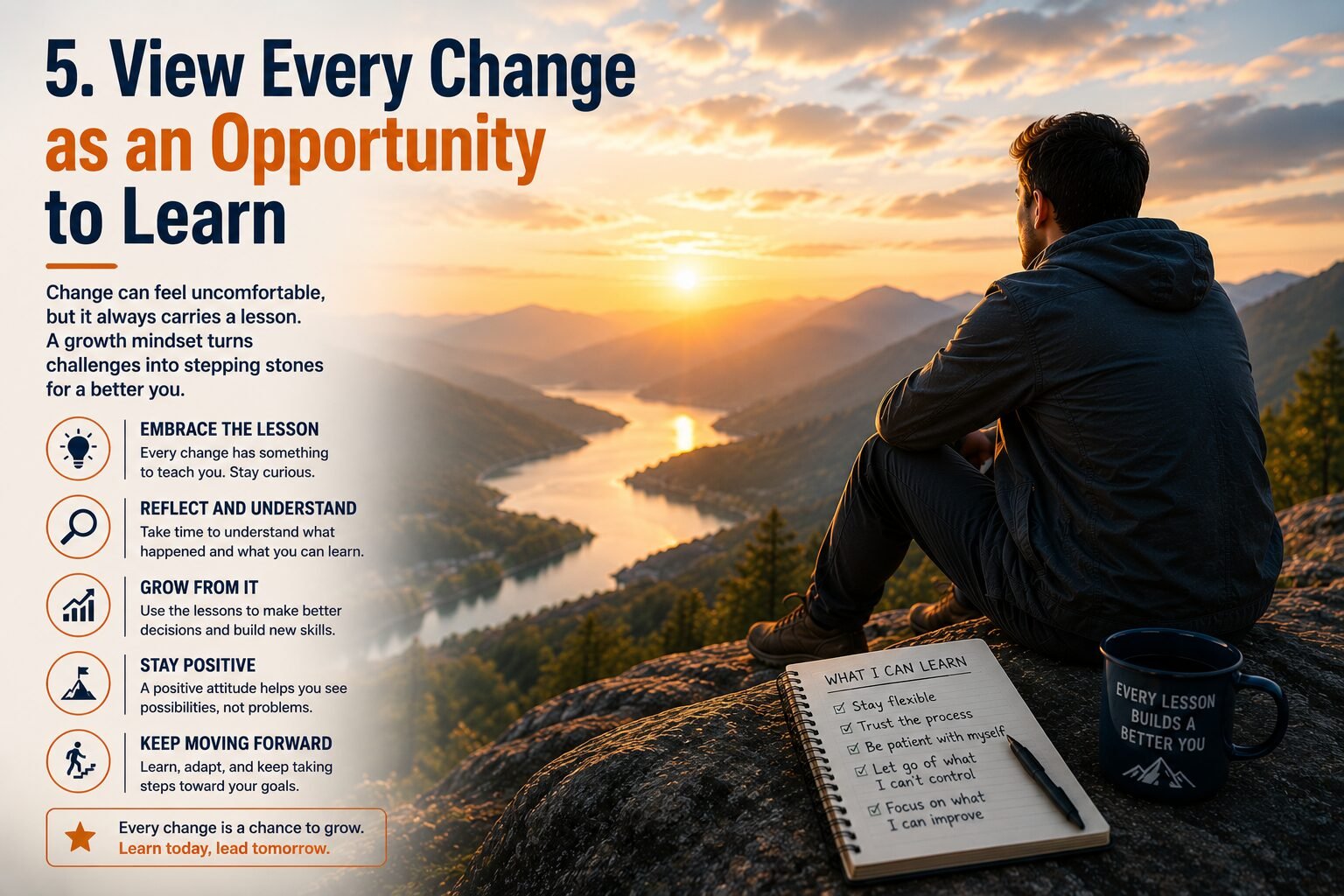
5. View Every Change as an Opportunity to Learn
Every transition teaches something.
A difficult season may strengthen resilience.
A failure may reveal a better direction.
A disappointment may build wisdom.
Even painful experiences often contain lessons that become valuable later in life.
Instead of asking, “Why is this happening to me?”
Try asking,
“What can this experience teach me?”
This simple question transforms challenges into opportunities for growth.
Growth Lives on the Other Side of Change
Many of life’s greatest opportunities begin as uncomfortable transitions.
The first day at a new job feels uncertain.
Starting a business feels risky.
Learning a new skill feels awkward.
Moving to a new place feels unfamiliar.
Yet these moments often become the foundation for future success.
Without change, there would be no progress.
Without uncertainty, there would be no courage.
Without challenges, there would be little personal growth.
Every successful person has experienced seasons where nothing felt predictable. What separates those who thrive is not the absence of change—it is their willingness to embrace it.
As we become more adaptable, we discover that confidence is not built by avoiding uncertainty. Confidence grows every time we successfully navigate it.




Moving Forward With Peace
Life will continue to change regardless of our preferences. Relationships will evolve, opportunities will come and go, circumstances will shift, and new challenges will emerge. This is not something to fear—it is simply the rhythm of life.
The central message of Video 6 reminds us that change itself does not have to create suffering. Much of the strain we experience comes from resisting what is already unfolding or convincing ourselves that every change will end badly. By releasing those assumptions and accepting change as a natural part of life, we free ourselves from unnecessary fear and emotional exhaustion.
Learning how to accept change without strain is not about eliminating uncertainty or pretending every transition is easy. It is about developing the confidence to face the unknown with a calm mind, an open heart, and a willingness to grow. When we stop fighting against inevitable change and begin working with it instead, we discover greater resilience, deeper peace, and the ability to thrive through every season life brings.