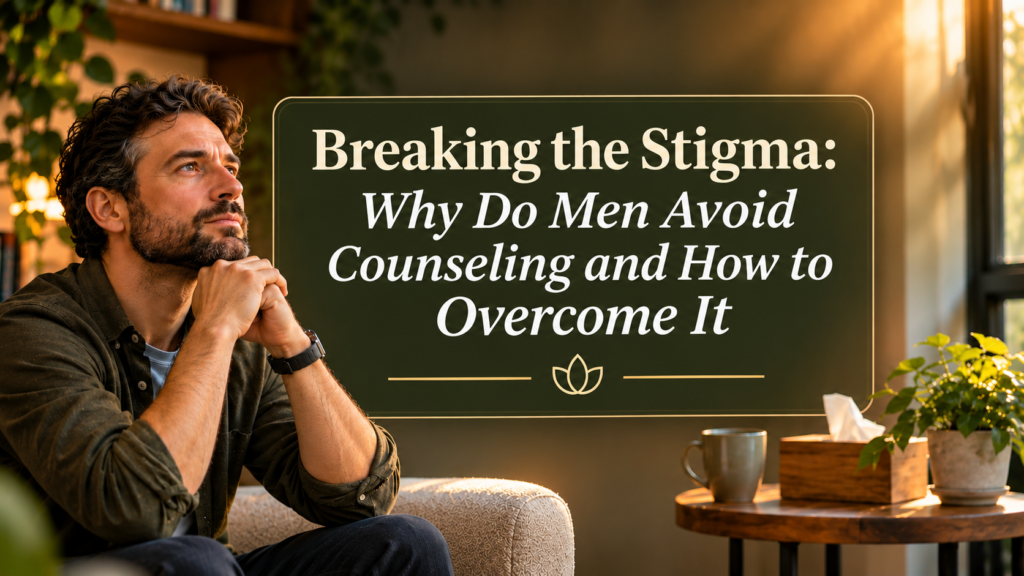
When Is It Time for Men to Seek Counseling? Recognizing the Signs Before Isolation Breeds Destruction
November 13, 2026
When Is the Best Time to Start Counseling?
Why Immediate Action Matters
Introduction
Life throws unexpected challenges our way. Whether it is a sudden loss, a major life transition, or a traumatic event, we all experience moments that shake us to our core. When these heavy emotional pushes and events happen, the immediate reaction for many of us is to try and push through it.
We tell ourselves that we are okay, that time will heal the wound, or that we simply need to keep moving forward. However, waiting too long to address these feelings can prevent proper emotional processing.
Understanding when to seek help is one of the most important decisions you can make for your mental well-being. According to mental health insights, the absolute best time to get counseling is immediately after an emotional event or trauma takes place.
▶
When Is the Best Time to Start Counseling?
Discover why seeking support after a difficult event can help you process emotions, understand your experience, and move toward healing.
Learn about the dangers of delaying emotional support and how taking the first step can make a difference.

The Danger of the "Wait and See" Approach
When people face difficult or stressful situations, time often passes very quickly. Days turn into weeks, and weeks turn into months. In the beginning, you might convince yourself, "I am okay, I won't get through this" or you might try to numb the pain just to survive the day.
Unfortunately, time alone does not always heal psychological wounds. When we avoid addressing trauma right away, our brain often pushes those painful emotions deep down.
Without proper processing, those unresolved feelings do not disappear; instead, they linger beneath the surface, manifesting later as anxiety, depression, burnout, or relationship struggles.
Waiting can create invisible walls. The longer you wait to talk to a professional, the more time you have to build up defense mechanisms, rationalize your pain, or convince yourself that seeking help is a sign of weakness.

Why Immediate Counseling Makes All the Difference
Getting into counseling immediately after a major event offers distinct advantages for emotional recovery. Here is why early intervention is so powerful:
When an event happens recently, the details, raw emotions, and physical reactions are still right at the surface. You do not have to spend weeks trying to remember how you felt or piecing together a fragmented memory.
Working with a counselor while the experience is fresh allows you to unpack the raw data of the event accurately and safely.
Immediately following a crisis or emotional push, people are often more vulnerable—in a good way. While defenses are temporarily down, individuals are typically much more open and willing to share their true feelings.
When you are raw and open, a professional counselor can help guide you through the initial shock and help you process the event before maladaptive coping mechanisms set in.
Addressing an issue right away stops it from compounding. Just like cleaning a physical wound immediately prevents infection, dealing with emotional trauma right away prevents psychological infection.
It keeps small anxieties from growing into chronic mental health hurdles.

Overcoming the Hesitation to Seek Help
It is completely normal to feel hesitant about starting therapy. Many people worry about what others will think, fear facing uncomfortable truths, or simply believe they can handle everything on their own.
Recognizing that you need support is a profound display of strength, not weakness.
Counselors provide a safe, non-judgmental space where you can express your thoughts freely. They do not judge your reactions; instead, they provide tools, strategies, and a listening ear to help you make sense of what you are going through.

Taking the First Step Toward Healing
If you or someone you know has recently experienced a difficult event, trauma, or heavy emotional push, do not wait for time to "fix it".
Reach out for professional guidance right away while the situation is fresh and the mind is open to healing.
Taking that step early can change the entire trajectory of your recovery, helping you process emotions effectively and move forward with resilience and peace of mind.